
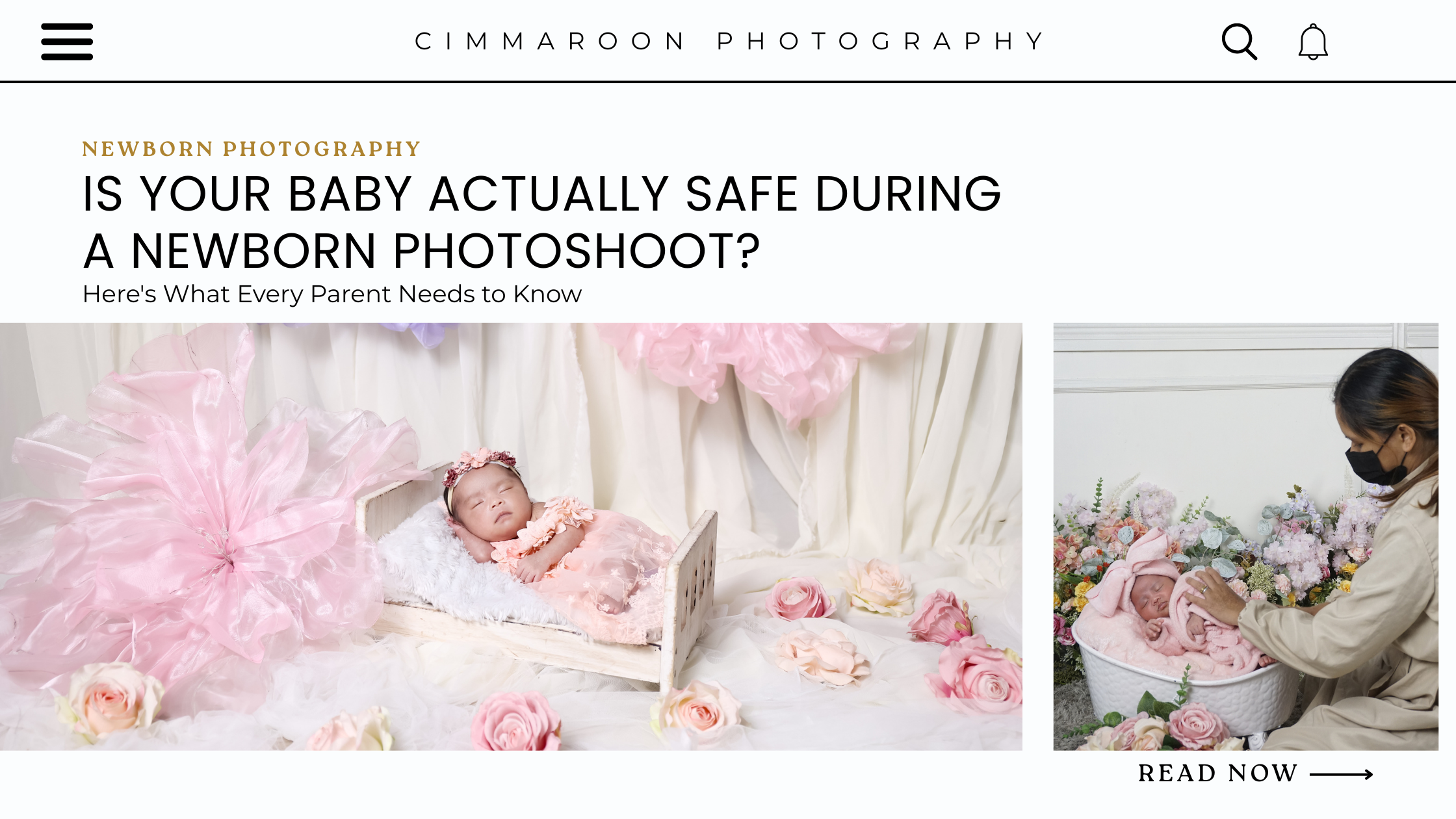
There’s a particular kind of excitement that comes with planning a newborn photoshoot. You’ve been scrolling through galleries, saving photos, picturing your baby in all those beautiful setups.
But underneath that excitement, there’s probably a quieter question sitting somewhere: Is this actually safe? And how do I know who to trust?
That question is a good one. It’s the question every responsible parent should be asking, and the fact that you’re asking it already means you’re doing this right.
Newborn photography safety isn’t a topic that gets talked about enough before parents book a session. Most of the conversation centers on the photos themselves — the poses, the props, the aesthetic — and not nearly enough on what it takes to execute those images without putting a days-old baby at risk. This guide is our attempt to change that.
By the time you finish reading, you’ll know what safe newborn photography actually looks like, what questions to ask any photographer you’re considering, and what warning signs to take seriously. You’ll feel confident walking into a session — not anxious, not guessing.
Why Newborn Photography Is Its Own Discipline
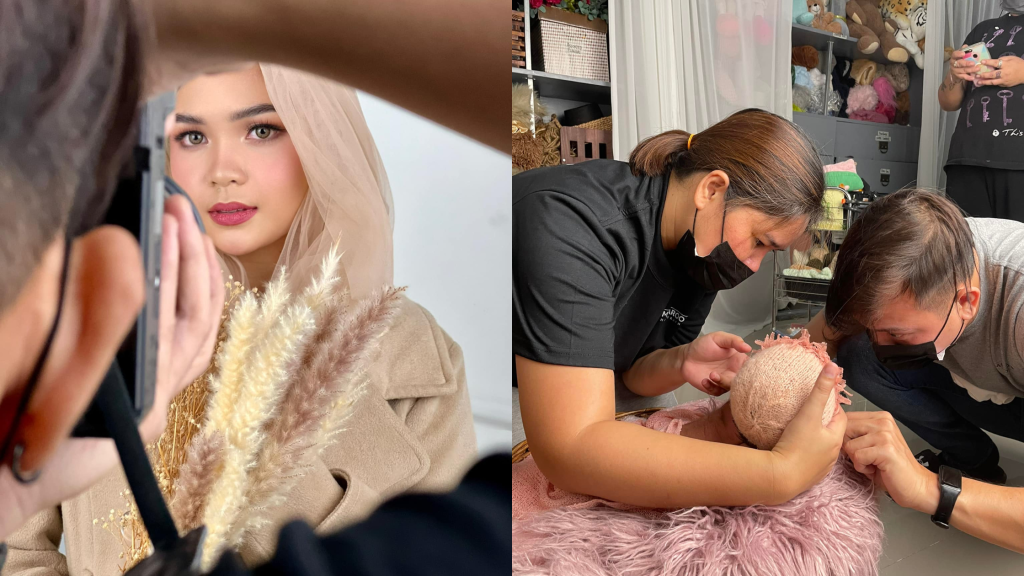
Here’s something that might surprise you: being a skilled photographer does not automatically make someone qualified to photograph newborns. The camera knowledge transfers. The posing knowledge does not.
Newborn photography sits in a category entirely its own, and the reason is the baby. A newborn in the first two weeks of life is physiologically unlike any other subject a photographer will ever work with.
Their bones are still soft and developing. Their neck muscles have almost no strength — a newborn cannot support her own head, which means every movement during a session must account for that.
Their skin is sensitive, their immune systems are still forming, and their sleep cycles are entirely unpredictable, requiring a photographer to have genuine patience and the ability to read a baby’s cues in real time.
When our team first began training specifically in newborn work, one thing that surprised us immediately was how much of the skill had nothing to do with photography. It was about handling — learning how to transfer a sleeping baby from one position to another without waking her, recognizing when she was in a deep enough sleep to attempt a particular pose, and knowing when to stop entirely and let her feed and rest before continuing.
You can know every technical setting on your camera and still be completely unprepared for a newborn session if you haven’t learned that side of it.
This is why newborn photography training exists as a formal field separate from portrait or family photography certifications. It’s also why the first question you should ask any photographer you’re considering is whether they have specific training in newborn work — and how recent that training is.
The Environment Matters More Than You Think
Long before a newborn session begins, a properly run studio has already done significant work to make the environment safe. Most parents don’t see this part. They arrive, they hand over their baby, and the magic seems to happen.
But behind that magic is a set of environmental conditions that make everything possible — and when any one of them is off, the session suffers and, more importantly, the baby is less safe.
Temperature is the most critical factor. Newborns cannot regulate their own body heat. When a baby is unwrapped and placed on a prop for posing, she loses warmth quickly — and a cold baby is a fussy baby, which means more handling, more repositioning, and more risk.
A professional newborn studio keeps its temperature considerably warmer than a typical room, often between 26 and 30 degrees Celsius, specifically for this reason. We’ve had sessions where adjusting the room temperature by just a degree or two made the difference between a baby who couldn’t settle and one who fell into a deep, peaceful sleep within minutes.
Lighting is the next consideration. Newborns are sensitive to bright, direct light — their eyes are still adjusting to the world outside the womb. Professional newborn photographers use soft, diffused lighting that is gentle enough for a baby to be near without discomfort. Harsh flash photography or strong direct light has no place in a proper newborn session, and if you see a photographer’s portfolio filled with images that appear to use harsh direct flash, that’s worth noting.
Sound matters too. A calm, low-stimulation environment — often with soft white noise playing in the background — helps newborns stay in the drowsy, settled state that makes safe posing possible. The more chaotic or loud the environment, the harder it is for baby to relax, and the more the session relies on rushing rather than patience.
Sanitation and Hygiene: The Protocols You Deserve to Know About
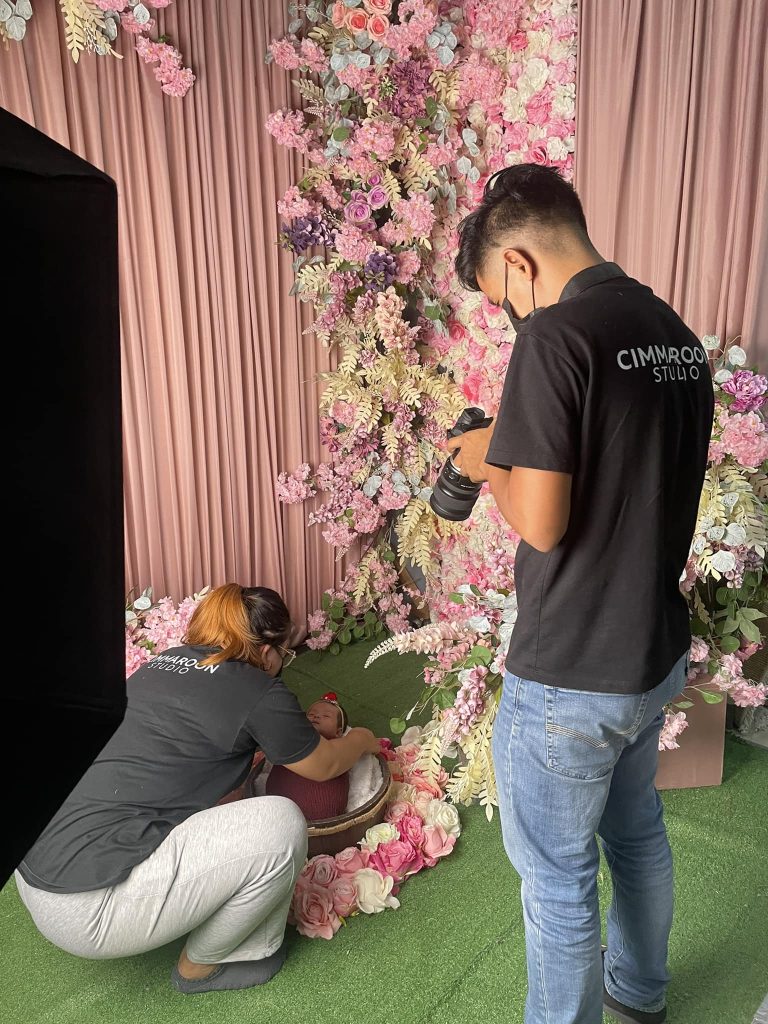
A newborn in the first two weeks of life has an immune system still in its earliest stages of development. This is something that gets acknowledged in pediatric clinics and in conversations about visiting relatives, but it doesn’t always make it into discussions about newborn photography — and it absolutely should.
Every prop your baby touches during a session, every wrap she’s swaddled in, every surface she rests on, is a potential vector for bacteria that her body isn’t yet equipped to fight the way an older child or adult would be. A professional newborn studio takes this seriously with specific, consistent protocols.
At Cimmaroon Photography, props are sterilized between every session—not wiped down and then sterilized. Wraps and fabrics are freshly laundered. Surfaces are disinfected. Our team maintains strict hand hygiene throughout every session, and we are thoughtful about who enters the studio space when a session is underway.
This level of protocol is often where amateur photographers who photograph newborns without specific training fall short — not because they don’t care, but because they haven’t been taught to think about a newborn’s vulnerability in this way. When you ask a photographer about their sanitation practices, the specificity of their answer will tell you whether they’ve genuinely thought this through or whether they’re answering in general terms because they haven’t.
What Proper Newborn Training Actually Looks Like
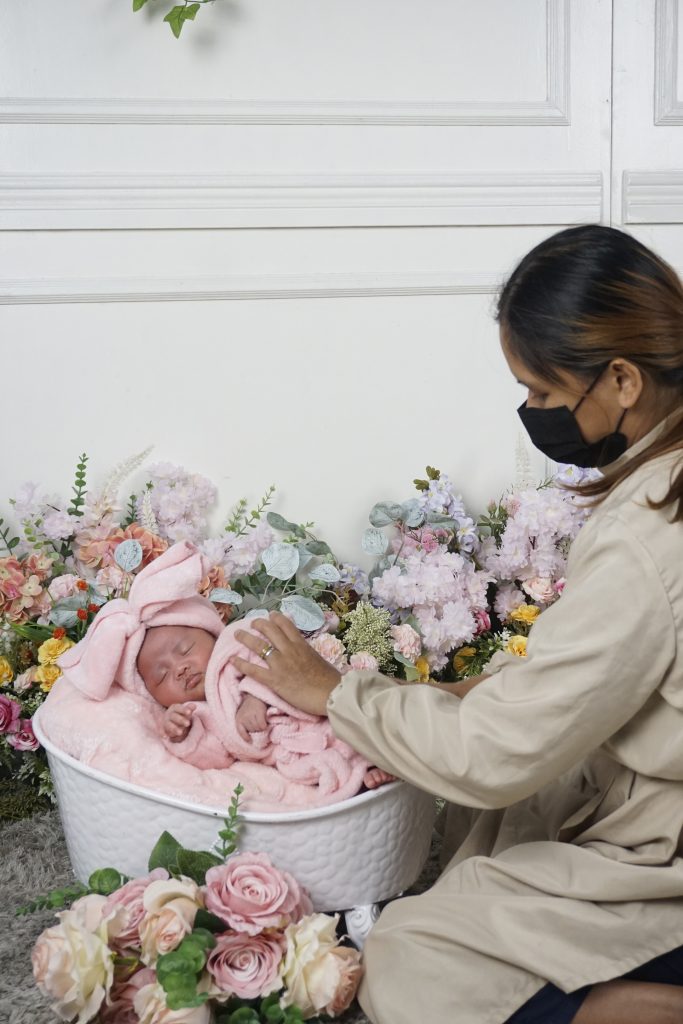
When people hear ‘newborn photography training,’ they sometimes picture a brief online course and a certificate. Real newborn training is considerably more involved than that.
A thorough training program covers infant anatomy and safe handling — specifically, the mechanics of a newborn’s movement and which positions place stress on developing joints and muscles. It covers approved posing sequences: which poses can be done solo, which require a spotter, and how to transition safely between positions.
Critically, it also covers how to read a baby’s signals. Knowing when a newborn is in a deep enough sleep to attempt a new pose, and knowing when they’re giving signs of overstimulation or discomfort that should prompt a pause, is a skill that takes real practice to develop.
For our ates and kuyas at Cimmaroon, training wasn’t a box we checked once and moved on from. It’s something we return to. Newborn safety guidance evolves as the photography community learns more, and we believe it’s our responsibility to stay current. When you see images in our portfolio that look effortless and peaceful, that peace is the result of a team that has put in genuine hours learning how to create it safely.
Curious what a real newborn session looks like behind the scenes? We share candid moments of our newborn photoshoots on our Facebook and TikTok pages — from how we keep babies comfortable to how we set up each pose safely. Come take a look and see the care that goes into every session.
Questions to Ask Any Photographer Before Handing Over Your Baby
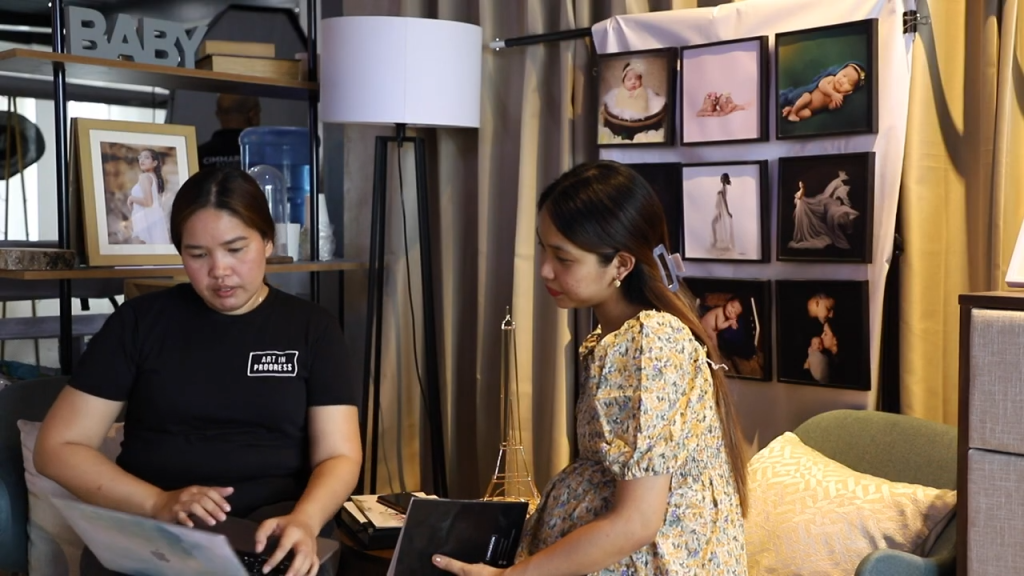
Asking a photographer direct questions about their training and safety practices is not rude. It is exactly what a good parent does, and any photographer worth booking will welcome it. Here are the questions you have every right to ask.
The first question is the most important: what newborn safety training have you completed, and when did you last update it? This isn’t about demanding a certificate on the wall — it’s about understanding whether they’ve made a genuine investment in this specific skill.
Newborn photography best practices evolve, and a photographer who trained years ago and hasn’t revisited those skills may be working from an outdated approach.
Ask about their composite pose process. Specifically, is a spotter always present during those setups, and is the baby fully supported at every point in the sequence? A clear, confident answer to this tells you they’ve thought it through. A vague answer is a reason to keep asking.
Ask what the studiois temperature is during newborn sessions. A professional will know this number and be able to explain why they maintain it. Ask how props and wraps are sanitized between sessions — the answer should be specific, not general.
Ask whether parents are present throughout the entire session, and what happens if baby needs a break. The answer to both should be yes, and whenever necessary, without hesitation. Ask how long a typical session runs. Anything significantly under two hours warrants a follow-up question.
A photographer who fields all of these with warmth and transparency is demonstrating exactly the kind of professionalism that makes them worth trusting. The ones who become defensive or dismissive when asked about newborn photographer safety tips are telling you something important.
You Are Always Part of the Session
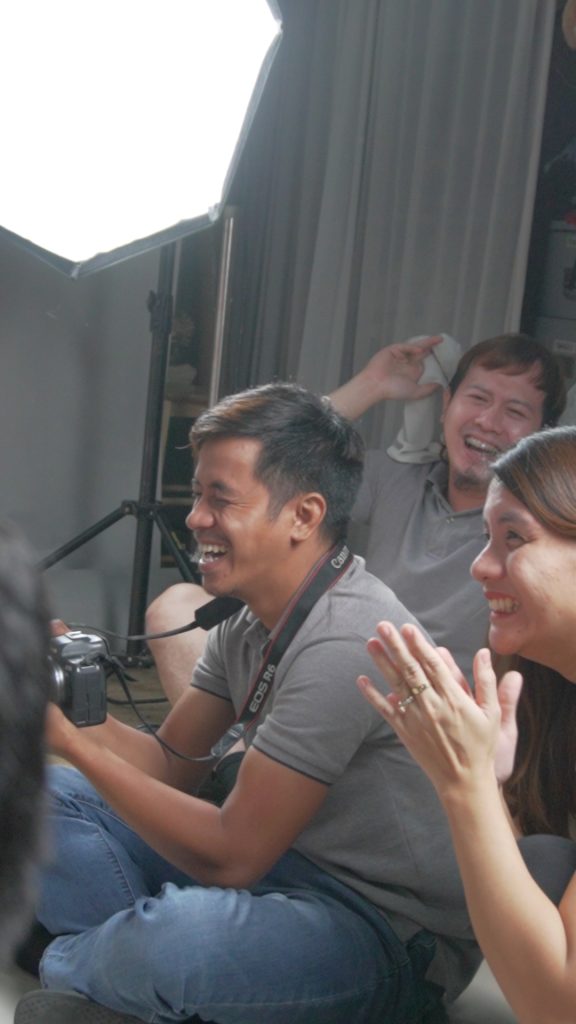
One thing we want every parent to know before they walk into any newborn session — ours or anyone else’s — is that you are not expected to sit in a waiting area while a stranger handles your baby. That is not how a properly run newborn session works.
You are present throughout the entire session. You give the go-ahead before any new pose begins. If something looks uncomfortable to you, you say so — and any photographer worth their salt will stop immediately and listen. If you want to pause to nurse or soothe your baby, say so. If at any point something feels off to you as the parent, you are always empowered to slow things down or stop entirely.
Parent instinct is something our team genuinely respects. We’ve had sessions where a mom noticed something subtle — a slight tension in how the baby was positioned, a prop that looked uncomfortable — before we did, and her speaking up led to a better outcome for everyone. That kind of involvement doesn’t disrupt a session. It makes the session safer.
A good photographer doesn’t just tolerate parent presence — they encourage it. If you ever feel like you’re being managed to the side during a newborn session, or that your questions are unwelcome, trust that feeling. The right team makes you feel like a partner in the experience, because that’s exactly what you are.
Red Flags to Watch for When Evaluating a Newborn Photographer
Choosing the right newborn photographer is one of the most important decisions you’ll make in this whole process, and it deserves the same careful thought you’d give to any other provider caring for your baby. Here are the warning signs to take seriously.
The first and most important is the absence of any mention of newborn-specific training on their website or social media. A photographer who has invested in proper newborn education will almost always say so — it’s a meaningful credential and something they’re proud of. If you’ve scrolled through a photographer’s entire profile and seen nothing about training, certifications, or their approach to newborn safety, that silence is worth questioning.
Their portfolio can also tell you a lot. Look carefully at how babies are positioned in their images. Are the babies always supported? Do the poses look achievable with a spotter present, or do they look like someone balanced a baby in an unsafe position and hoped for the best? Unsafe posing in a portfolio isn’t just an aesthetic problem — it’s evidence of how that photographer works.
Be cautious of photographers who offer very short session times for newborn work. A proper newborn photoshoot safety protocol requires time — feeding breaks, settling periods, careful transitions between poses. Sessions that are advertised as one hour or less should prompt questions, because genuinely safe newborn photography cannot be rushed into that window.
A professional newborn session typically runs three to four hours, and that’s not because the photographer is slow. It’s because baby’s pace leads the session, always.
Finally, pay attention to how a photographer communicates before you’ve even booked. Do they ask about your due date, your baby’s feeding schedule, any special requests? Do they send pre-session information? A photographer who offers little to no pre-session communication hasn’t built a process that puts your baby’s comfort and safety first.
The Newborn Season Is Worth Honoring — Safely
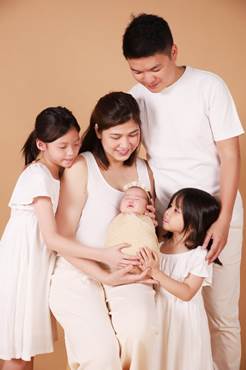
Here is the takeaway we want you to carry from everything in this guide: a well-executed newborn photoshoot is genuinely safe. It is joyful. It produces images that parents look back on for the rest of their lives with real gratitude that they did it.
The key phrase is well-executed. The difference between a session that is safe and one that isn’t comes down entirely to preparation, training, and the professional care of the team you choose. Parents who do their research, ask the right questions, and trust their instincts are the ones who walk away with beautiful photos and a beautiful experience.
You are not being overprotective by asking about safety training before you book. You are not being difficult by asking about sanitation protocols or composite posing techniques. You are advocating for your baby, and that is precisely what you are supposed to be doing.
The newborn season is brief, tender, and impossible to get back. The photos from a well-run session capture it in a way that nothing else quite does. You deserve both things: the photos and the peace of mind. They are not in conflict with each other — not when you choose the right team.
You’ve done the research. You know what to look for. When you’re ready to book with a team that takes newborn safety as seriously as you do, we’d love to meet your little one.
Book a newborn shoot with Cimmaroon Photography today and experience what Pampanga parents keep coming back to tell their friends about.